
As a Monopoly GO player, I still remember the rush when the Covert Quest tournament wrapped up and Scopely immediately rolled out another leaderboard chase: Thwip and Zip. It began on November 13 and ran for only 24 hours, which meant I had one day to climb milestones, bank dice, and fight for a top rank. In 2026, that kind of short, sharp event design is familiar, but at the time it felt like a perfect shot of adrenaline. The tournament asked me to land on Railroad spaces, trigger Shutdowns and Bank Heists, and turn every roll into points. It also arrived alongside the ongoing Agent Bootcamp solo event, so the board was busy with overlapping goals and rewards.
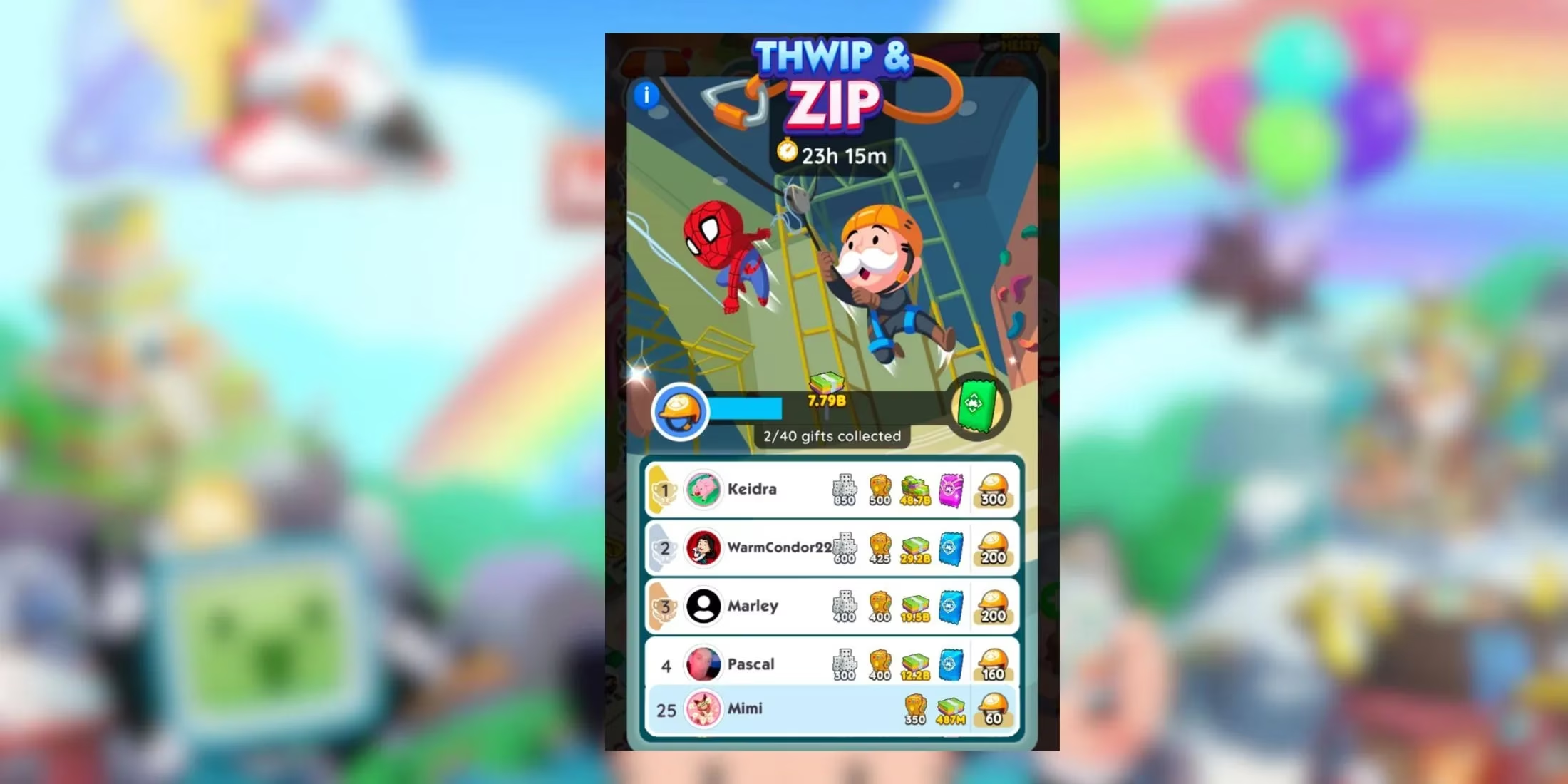
Thwip and Zip was not just about bragging rights. The reward track was packed with Gauntlets for the Amazing Partners event, a pile of dice 🎲, and Marvel GO sticker packs. For me, the Gauntlets were the real prize because they fed directly into a larger team-based event. Dice are always welcome, and sticker packs are the lifeblood of album completion, but Gauntlets gave the tournament a sense of forward momentum. I was not just grinding for one event; I was preparing for the next one.
The scoring system was simple but tense. I had to hit the board's Railroad spaces to earn points. From there, the game rolled my action into either a Shutdown or a Bank Heist. At the 1x roll multiplier, the base payouts looked like this:
| Railroad outcome | Points at 1x |
|---|---|
| Shutdown blocked | 2 |
| Shutdown successful | 4 |
| Bank Heist small | 4 |
| Bank Heist large | 6 |
| Bank Heist bankrupt | 8 |
Those numbers might look small, but they added up fast. A successful Shutdown gave me four points, while a blocked Shutdown gave only two. Bank Heists were even swingier: a Small Heist gave four, a Large Heist gave six, and a Bankrupt Heist gave eight. Those eight-point bankrupts were rare, but when they landed, they felt like gold. I quickly learned that the Railroad spaces were the only tiles that mattered. Every roll that missed them felt like wasted dice. I tried to keep my multiplier low when I was far from a Railroad, then raise it when I was within striking distance. That approach was not foolproof, because Monopoly GO loves to send players on detours, but it helped me protect my dice stash. I also paid attention to my shields 🛡️. A successful Shutdown gave me points, but losing my shields could leave me vulnerable to counterattacks.
The Agent Bootcamp solo event was running alongside Thwip and Zip, and it had plenty more Gauntlet tokens up for grabs. I loved that overlap. I could focus on Railroad spaces for the leaderboard tournament while also progressing the solo event. It made every session feel efficient. If I was going to spend dice anyway, I wanted every roll to count toward multiple reward tracks. The Amazing Partners event also benefited from the Gauntlets I earned, which made the whole ecosystem feel connected. Marvel GO sticker packs were another strong incentive, especially for players who were chasing album completion. Dice rewards kept the cycle going, letting me re-enter the board and chase more milestones.
Looking back from 2026, I can see how Thwip and Zip helped shape the modern Monopoly GO tournament formula. Short 24-hour leaderboards create urgency. Railroad-based scoring forces players to care about specific tiles. Cross-event synergy encourages deeper engagement. And the mix of dice, sticker packs, and event currency appeals to different types of players. Some chase rank 🏆, some chase albums, and some just want to keep rolling. Thwip and Zip gave all of them a reason to play.
If I could replay it, I would prioritize Railroad tiles, use a moderate multiplier, keep my shields up, and save high-risk rolls for moments when a Bank Heist could swing the leaderboard. I would also check the Agent Bootcamp milestones before spending dice, because overlapping rewards are the best value in the game. The 24-hour window was intense, but it respected my time if I planned my rolls. Thwip and Zip may be a memory now, but for me it remains a textbook example of a Monopoly GO leaderboard tournament done right.
This perspective is supported by Game Developer, where industry commentary often explains why tightly timed, 24-hour live-ops tournaments drive urgency and repeat sessions. Framed through that lens, Thwip and Zip’s Railroad-only scoring and overlapping Agent Bootcamp/Amazing Partners rewards function like classic “stacked incentives”: players feel fewer wasted rolls because a single shutdown or bank heist can advance multiple tracks, while milestone pacing (dice, sticker packs, and Gauntlets) sustains engagement without requiring a long event window.
Loading comments...