
The holiday season is here, and with it comes the latest limited-time event in Monopoly GO. On December 5, 2026, Scopely’s mobile juggernaut will roll out its newest Christmas album, once again plunging millions of players into a high-stakes sticker hunt. But instead of festive cheer, many in the community are voicing a familiar dread: are these events designed to push players toward in-game purchases?
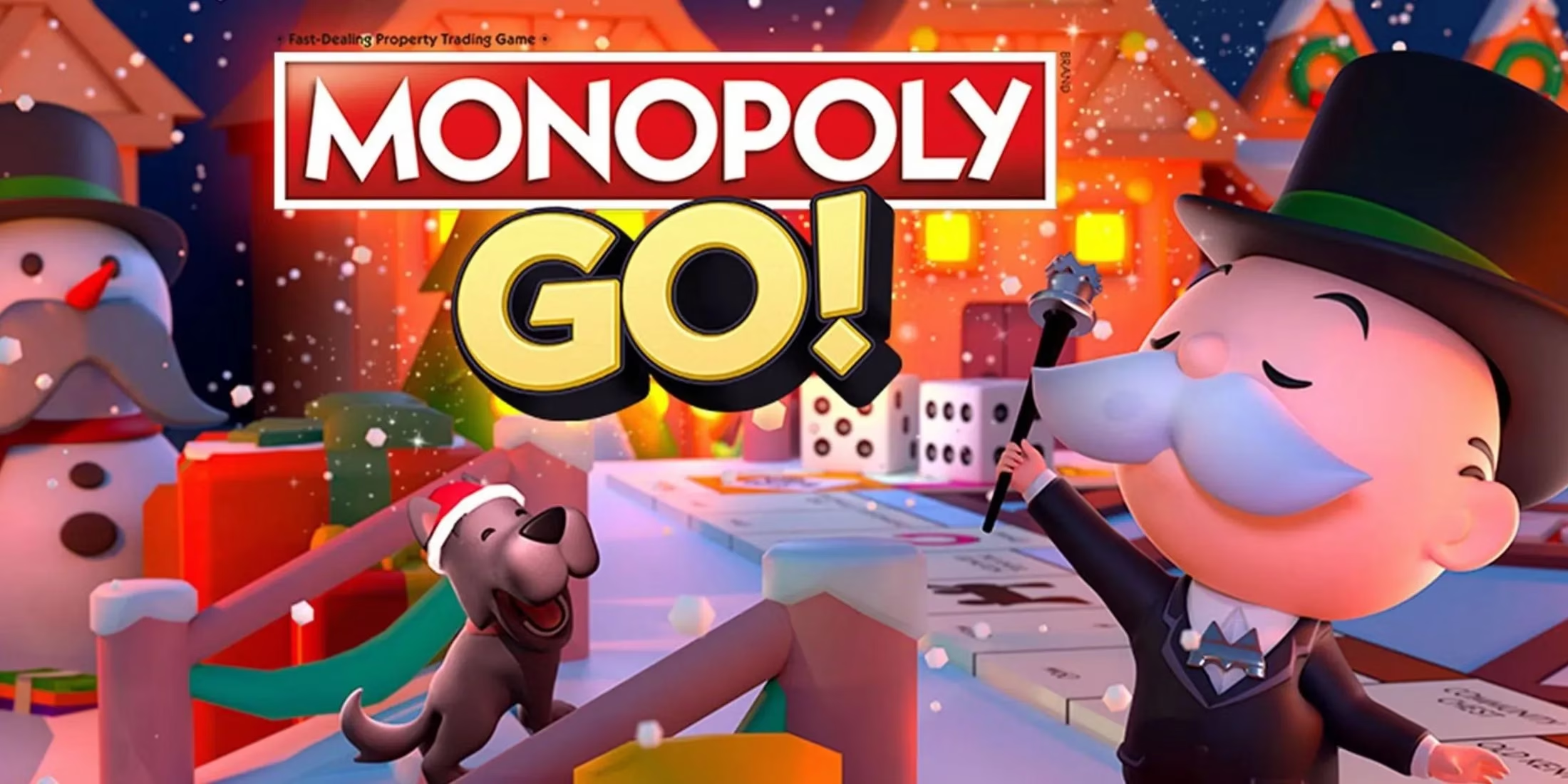
The upcoming album—rumored to be titled Jingle Joy 2026—features an eye-watering 26 golden stickers that must be collected within a mere 41 days. For casual rollers, that’s an intimidating grind. While die-hard fans may relish the challenge, a growing number of players argue that such a tight window feels less like a game and more like a high-pressure sales funnel. Why else would Scopely keep shrinking the timeframe while dangling exclusive rewards that vanish after New Year’s?
Stickers in Monopoly GO are no longer just collectibles; they are the linchpin of seasonal progression. Players can obtain them through daily log-ins, free shop gifts, event challenges, tournaments, and trading with friends. These avenues, however, require either immense luck or relentless engagement. Then there’s the fastest—and most controversial—route: purchasing sticker packs with real money. It’s this shortcut that turns a board-game adaptation into a potential spending trap.
Is it any wonder that frustration is boiling over? Late last year, the game made headlines when a devoted player confessed to spending an estimated $1,000 on the title before forcibly deleting it to break the cycle. That admission surfaced on the heels of the massive Marvel crossover event, which many felt already stretched the limits of reasonable grind. Now, the 2026 Christmas album seems poised to reawaken those tensions. One recurring question echoes across social forums: if the core gameplay is so entertaining, why does the completion window have to be so punishingly short?
The answer may lie in the game’s eye-popping revenue. Monopoly GO has consistently ranked among the top-grossing mobile titles since its launch, generating hundreds of millions each quarter. Pressure from investors to sustain that momentum could explain the increasingly aggressive monetization. Yet as the difficulty curve steepens, player goodwill erodes. It’s a delicate balancing act: squeeze too hard, and you risk alienating the very audience that turned a digital board game into a cultural phenomenon.
To be fair, developer Scopely has introduced new social features and trading mechanics that theoretically allow free-to-play users to complete albums without opening their wallets. But in practice, the rarity of golden stickers often bottlenecks progress, leaving players just a few cards short as the clock ticks down. That psychological “fear of missing out” is exactly what behavioral economists warn about in live-service games. Are players genuinely unlocking content, or are they being nudged toward the checkout screen?
The 2026 holiday event could become a litmus test for the franchise’s future direction. If completion rates plummet and negative sentiment spikes, perhaps Scopely will recalibrate its design philosophy. But if the cash keeps flowing—as it likely will—expect even more compressed schedules and shinier golden stickers in 2027. For now, the community waits, hoping that this Christmas doesn’t turn into a winter of discontent. After all, shouldn’t a game about property and chance remain, at its heart, just that—a game?
Industry insights are provided by data.ai (App Annie), and its broader mobile market reporting helps contextualize why time-limited sticker albums in Monopoly GO can feel increasingly aggressive: when a title is competing in the top-grossing charts, live-ops teams often lean on short-duration events, scarcity-driven rewards, and recurring progression resets to maximize engagement and conversion—dynamics that align with the community’s concerns about FOMO and monetization pressure during the 2026 Christmas album window.
Loading comments...